
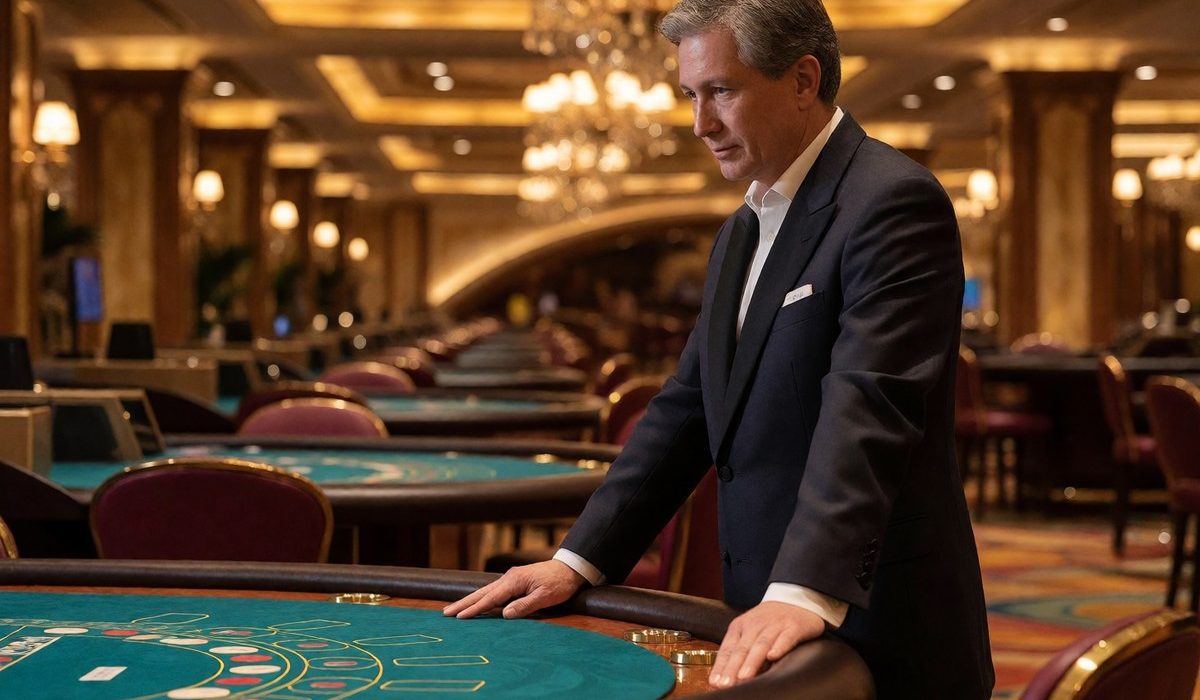
Macau casino operators like MGM China and Wynn Macau are shifting focus toward premium mass players to offset thin VIP margins. While Galaxy Entertainment and Sands China face pressure, total non-gaming spending in Macau rose 11 percent in 2023 to 71 billion patacas.
The premium mass victory
MGM China and Wynn Macau capture the most benefit from the shift toward premium mass players. MGM China grew its gross gaming revenue share from 9.5 percent in 2019 to more than 17 percent this year. Wynn Macau generates high revenue per hotel room because it focuses on the affluent segment. You should recognize that this shift changes the entire revenue composition of the market. Sands China and Galaxy Entertainment face more pressure because their business models rely more on the lower end of the mass market. Galaxy and Sands China shares fell by 11.2 percent and 16.7 percent respectively since the start of the year. While VIP gaming carries thin margins, premium mass players place bets at baccarat tables from hundreds to a few thousand dollars. MGM China adds more villas and suites to its properties to attract these guests. Wynn Macau builds food halls to attract more foot traffic. Galaxy plans to open its Capella Hotel to increase demand in the premium mass segment, with Phase 4 on track for 2027. Sands China remains the largest operator in Macau despite closing some hotel rooms and its 15,000-seat show arena for renovations in January. Total non-gaming spending in Macau rose 11 percent in 2023 to 71 billion patacas. Galaxy reported a gross gaming revenue of HK$10.9 billion in the first three months of 2025, an increase of 13.6 percent year-on-year. Galaxy Macau reported a gross gaming revenue of HK$9.54 billion for that same period, a 17.2 percent increase year-on-year but a decrease compared to the previous quarter. StarWorld saw its gross gaming revenue fall to HK$1.36 billion, a 5.2 percent decline year-on-year and a 2.5 percent decline quarter-on-quarter. StarWorld adjusted EBITDA fell by 19.5 percent year-on-year to HK$350 million.
Regulatory changes for junkets
The Macau government granted new licenses to the six incumbent operators to ensure stability. This decision keeps Sands China, Wynn Macau, Galaxy Entertainment, MGM China, Melco Resorts, and SJM Holdings in control of the market. Genting Malaysia missed the opportunity to secure a license. The number of licensed junket operators in Macau reached 30 this year. This number is the highest since January 2023. The Gaming Inspection and Coordination Bureau mandates specific limits on how many junkets each concessionaire can use.
| Operator | Junket Partner Limit |
|---|---|
| Sands China | 12 |
| SJM Holdings | 12 |
| MGM China Holdings | 8 |
| Melco Resorts & Entertainment | 8 |
| Galaxy Entertainment Group | 5 |
| Wynn Macau | 5 |
Junkets cannot share in casino revenue because a 2023 statute limits their commission to 1.25 percent of rolling turnover. Since August 2024, junkets are also prohibited from issuing gambling credit. This credit function belongs to the casino concessionaires under the Legal Regime of Credit Concession. The government also aims to ensure local employment and the development of overseas tourist markets through these licenses. The total number of licensed junket operators remains capped at 50 for the year. Regulators focus on transparency, risk management, and compliance to prevent money laundering or financial misconduct. The increase in licensed operators suggests a stabilizing market where the licensed segment contributes to the aggregate gross gaming revenue.
Margin compression and Melco’s strategy
Operators face rising costs because they now handle services that junkets used to manage. This structural change puts pressure on profit margins across the industry. Melco Resorts Chairman and CEO Lawrence Ho advocates for disciplined spending to protect the guest experience. Melco observed a 50 percent drop in scheduled major events from Galaxy and Sands in the second half of 2026. This drop occurred because several operators scheduled events on the same weekends. JP Morgan reduced its 2026 EBITDA estimates for the six Macau operators by an average of 3 to 4 percent. The bank moved its rating on SJM Holdings from Neutral to Underweight and on Melco Resorts from Overweight to Neutral. This move follows an increase in VIP baccarat gaming in the fourth quarter of 2025, which carries lower margins than the mass segments. Melco reported a group-wide adjusted property EBITDA of approximately $304 million for the second quarter of 2026. The VIP win rate at City of Dreams Macau declined from 3.9 percent in the second quarter of 2025 to 2.7 percent in the second quarter of 2026. Melco also spent approximately $134 million on share repurchases in 2026. Melco holds approximately $1 billion in consolidated cash on hand. Melco opened a new gaming area with 18 tables at City of Dreams near the southwest entrance at the end of July. This area provides easy access to games for walk-in patrons. Melco also expects to recommence dividends in 2027. Melco’s property EBITDA in the Philippines grew by 9 percent year-over-year to $31 million in the second quarter of 2026. Melco’s property EBITDA in Cyprus rose 60 percent year-over-year in the second quarter of 2026. Melco’s property EBITDA in Sri Lanka rose to $3.5 million during the same period. Melco’s total daily operating expenses in Macau for the second quarter of 2026 remained steady at $3.4 million.
Economic outlook and growth
Deutsche Bank analyst Steven Pizzella forecasts 5.8 percent growth in Macau gross gaming revenue for 2026. He expects this growth to reach US$32.8 billion. JP Morgan analysts predict profit momentum will grow by 6 to 7 percent this year. The International Monetary Fund notes that mass-market gaming remains the primary driver of revenue. Mass-market gaming accounted for 73 percent of Macau’s casino gross gaming revenue in 2025. Macau’s total economic output remains 10 percent lower than pre-pandemic levels. The International Monetary Fund predicts Macau’s GDP growth rate will decline from 4.7 percent in 2025 to 3.3 percent in 2026. Macau aims to generate 60 percent of its GDP from non-gaming activities by 2030. In January, Macau’s gross gaming revenue reached MOP 22.63 billion, an increase of 24 percent compared to the same month in 2025. This figure was the highest January total since 2019. The 2025 gross gaming revenue reached MOP 247.4 billion, a 9.1 percent rise from the previous year. This figure represented 84.6 percent of the 2019 total of MOP 292.46 billion. In the first half of 2026, Macau’s gross gaming revenue grew by 6.9 percent, driven by mass-market activities. The International Monetary Fund predicts further GDP decline to 3.1 percent in 2027. The industry faces difficulty with economic diversification and relies heavily on mainland China visitors, who make up 70 percent of all tourists. Will the operators successfully manage the transition to non-gaming revenue?