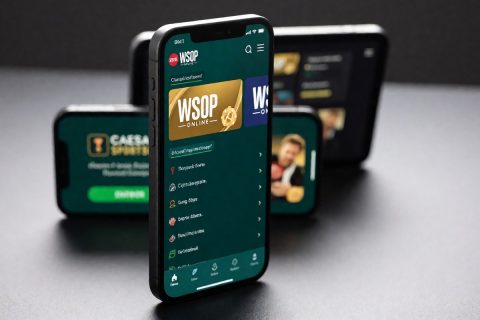
Caesars Digital faces significant strategic shifts as it transitions to a third-party platform for WSOP Online in 2026. The migration relies on MSIGA shared liquidity between New Jersey, Nevada, and Michigan while navigating complex brand separation from NSUS Group.
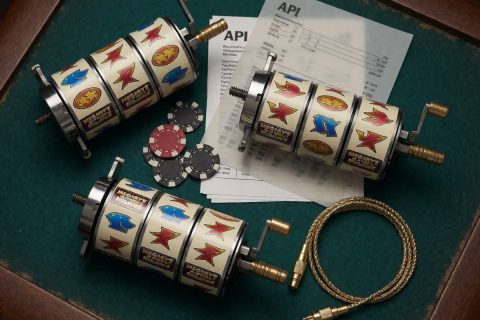
Aggregator platforms like Softswiss and EveryMatrix charge 4–6% fees to simplify game delivery, while direct API integration offers 18–25% revenue shares. These economic models shape how operators manage Megaways slot licensing and technical requirements.

Stake.com expands into Brazil as the second-largest market while Anatel blocks 1,443 unlicensed platforms. Regulatory shifts include new tax rules for licensed operators and strict KYC requirements that create friction for crypto-native players.
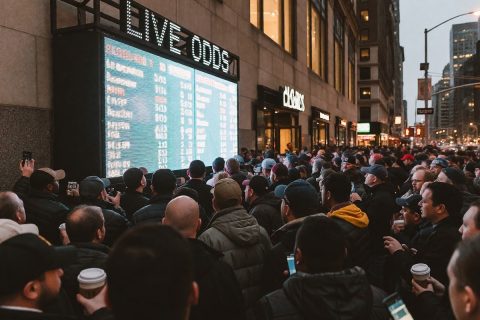
New York mobile sportsbooks generated over $2.05 billion in revenue in 2024 despite a 51 percent tax rate. Proposed legislation aims to lower this tax burden to 35 percent by increasing the number of licensed operators to 14 by January 2026.

Kindred Group faces significant challenges in the Nordics as Swedish and Danish regulators tighten advertising bans. The company reported a 17.0% drop in Nordics revenue to £65.3m following regulatory shifts and compliance hurdles in Norway and the Netherlands.

Galaxy Entertainment reported a 12 percent increase in mass-market sales despite a 13 percent drop in high-stakes revenue. Macau's September gross gaming revenue fell 1.2 percent year-on-year to 18.1 billion patacas amid regulatory shifts and changing VIP demand.

Michigan regulatory shifts requiring in-state studios have driven massive expansion for providers like Evolution. This market growth follows a surge in Michigan internet gaming revenue, which reached $171.8 million in March.
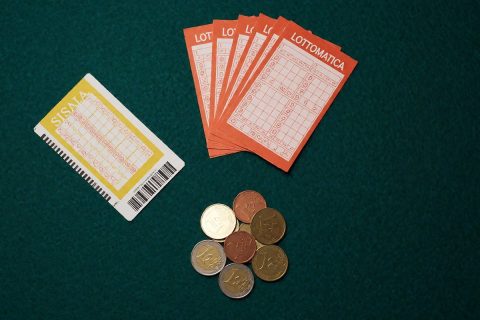
Flutter and Lottomatica compete for a new nine-year national lottery license in Italy as the government prepares a bidding process with a €1 billion minimum tender. The Italian gambling market remains a massive economic driver, with total wagers exceeding €136 billion in 2022.

Ontario iGaming revenue reached CA$405.4m in April 2026 as PointsBet Canada CEO Scott Vanderwel navigates strategic shifts. The company maintains 20,000 active players in the province while managing different financial pressures compared to the high-cost U.S. market.

Rush Street Interactive reported $393.8 million in revenue for the quarter ending June 30, 2026, driven by significant growth in North American monthly active users. This momentum occurs as competitors like Caesars Digital adjust promotional spending within the Pennsylvania market.

Entain faces significant financial pressure from a UK remote gaming duty increase to 40% and a 36% revenue drop in Brazil. The company relies on BetMGM's $483 million iGaming revenue and NetEnt software to stabilize margins against rising regulatory costs.

Betano leads the Brazilian market with 27% brand awareness as the industry faces new regulatory hurdles and political pressure. The market generated R$37 billion in gross gaming revenue during 2025 despite strict licensing requirements and potential advertising bans.

Fanatics Betting and Gaming has launched its sportsbook in Illinois, upgrading four former PointsBet locations including Hawthorne Race Course. Meanwhile, Chicago video gaming terminal operators face a regulatory stalemate that impacts a projected $6.8 million in licensing revenue.

Apollo has closed a $6.3 billion acquisition of IGT's gaming and digital business alongside Everi, creating a platform with $2.6 billion in annual revenue.

Turkey's MASAK and Justice Ministry are intensifying efforts against illicit gambling, identifying 7 billion lira in illegal earnings during the Sibergoz-46 operation. Authorities have targeted over 800 illegal operations and 183,000 reported betting sites to dismantle offshore financial pipelines.

DraftKings achieved its first full year of profitability in 2025 with $6.05 billion in revenue, though Q2 2026 results show a $67.6 million net loss due to rising payouts and marketing costs. Total handle for the sportsbook reached $13.1 billion despite shrinking margins.

Evoke faces significant financial pressure as the UK Remote Gaming Duty rises from 21% to 40%, potentially increasing annual duty costs by up to £135 million. Operational risks include regulatory fines and fragmented account management across its various brand licenses.

Macau casino operators like MGM China and Wynn Macau are shifting focus toward premium mass players to offset thin VIP margins. While Galaxy Entertainment and Sands China face pressure, total non-gaming spending in Macau rose 11 percent in 2023 to 71 billion patacas.
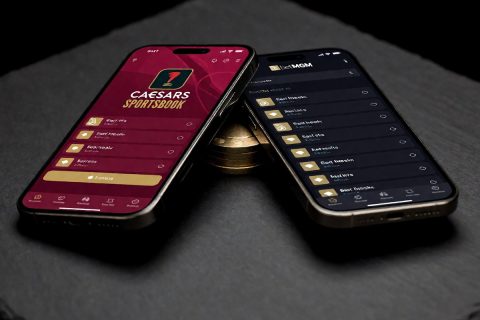
Senator Joseph Addabbo Jr. is leading a legislative push for New York mobile casino legalization that could generate $1 billion in annual tax revenue. This comparison evaluates how Caesars and BetMGM stack up regarding welcome bonuses, sportsbook variety, and reward programs.

Flutter secures a 12% Brazilian market share through its 350 million US dollar acquisition of NSX Group. Meanwhile, BetMGM reports 1.4 billion US dollars in net revenue for the first half of 2026 as Brazil's regulated betting landscape evolves.

Flutter Entertainment's €2.3 billion acquisition of Snaitech aims to create €70 million in cost synergies as the Italian gambling market consolidates. High license fees and strict advertising bans favor large operators like Lottomatica and Flutter over smaller competitors.

FanDuel led Pennsylvania with a $165.7 million July handle, beating DraftKings despite facing challenges with Gen Z engagement. While older fans drive revenue, younger users show higher participation in fantasy football but prefer athlete-driven content over traditional team loyalty.

The Nevada Gaming Control Board rejected license applications from DraftKings and Flutter Entertainment following a dispute over sports event contracts. The decision follows a Ninth Circuit ruling regarding whether sports-related contracts constitute unlawful prediction markets.

Entain faces significant regulatory and fiscal hurdles following its $1.2 billion Novibet acquisition. The Greek market presents challenges including strict HGC licensing oversight, a 35% tax on gross profits, and intense competition from an unlicensed market valued up to $1.7 billion.

New FCA stablecoin rules and UK Gambling Commission mandates impact operators like Bet365. While legacy platforms face strict deposit limits, crypto-native sites like ZunaBet offer instant withdrawals for the 24% of UK adults who own cryptocurrency.

LeoVegas Group owes the Kansspelautoriteit 500,000 euros due to failures in its duty of care. The enforcement action comes as the Dutch regulator increases supervision of player protection and advertising rules through 2026.

Kindred Group is exiting the North American market after Unibet struggled with low market shares, such as falling below 1% in Pennsylvania. High state licensing fees in New York and Ohio create massive financial barriers that favor industry giants like DraftKings and FanDuel.

Rush Street Interactive reported $393.8 million in Q2 2026 revenue, driven by a casino-first strategy. As the Ontario iGaming market reaches a $10 billion milestone and enters a maturity phase, RSI is prioritizing high-margin products to maintain profitability.
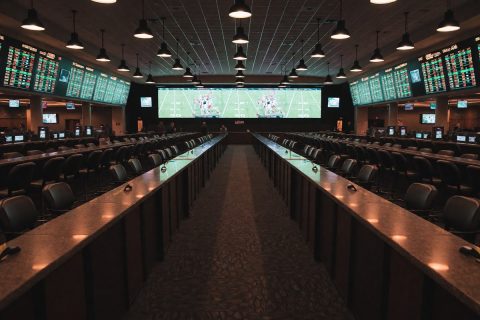
Penn Entertainment faces significant hurdles with its ESPN Bet relaunch, including a $109.8 million interactive division loss and technical streaming lags that could impact bettors during the college football season.
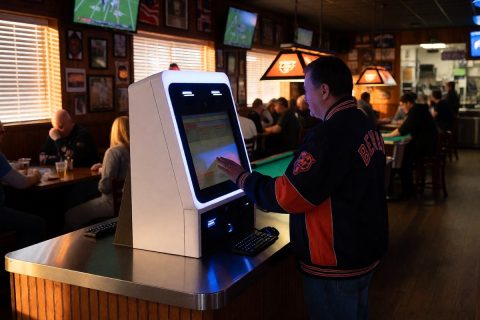
Illinois bettors placed a record $1.078 billion in wagers in September 2026. While DraftKings and FanDuel dominate the market with 38% shares each, Fanatics struggles to gain ground despite leveraging its e-commerce database and the acquisition of PointsBet.

MGM Resorts is contributing $450 million in equity to the Osaka Yumeshima integrated resort project. Despite construction progress, Mayor Ichiro Matsui has shifted the completion timeline to 2027 or 2028, moving away from the original 2025 World Expo goal.
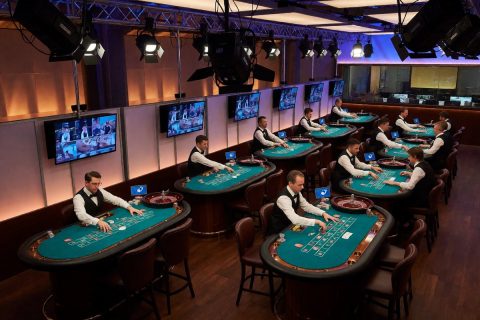
Evolution faces significant headwinds as net revenue growth slowed to 1.5% amid regulatory crackdowns in the Philippines and UK. Expansion efforts are further complicated by labor unrest in Georgia and tightening compliance requirements across global markets.

Tracing the evolution of 888 Holdings from its 1997 founding to its massive £1.95 billion acquisition of William Hill in 2022. The company has navigated market expansions, regulatory fines, and a planned rebranding to Evoke plc.

BetMGM reported $711 million in Q2 2026 revenue while targeting Brazil through a joint venture with Grupo Globo. The Brazilian market is projected to reach 39 million active online accounts by 2026, fueled by massive interest in the upcoming World Cup.

Caesars Sportsbook utilizes low latency Genius Sports feeds and AI models with 75-85% accuracy to optimize live NFL betting. These technologies help manage the 4.76% overround on standard -110 pricing while catering to in-play bettors who spend 87% more monthly.
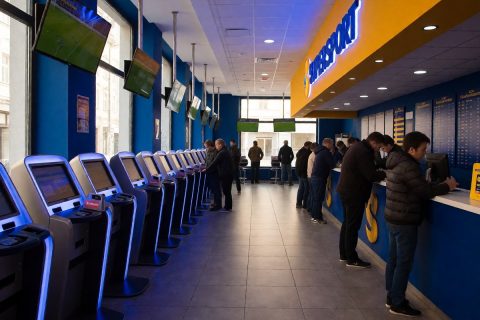
Entain is selling 20% of its Entain CEE unit to EMMA Capital for €425 million, valuing the business at €2.1 billion. This strategic move aims to reduce debt and simplify group structure while managing assets like SuperSport, which holds a 54% market share in Croatia.
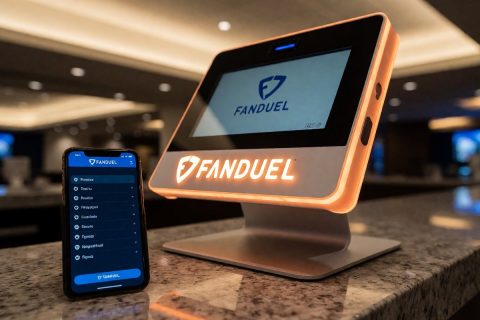
Flutter plans to buy Boyd Gaming Corporation's 5% stake in FanDuel for $1.755 billion, implying a $31 billion valuation. FanDuel maintains a 44% US market share, generating $6.96 billion in revenue in 2025.
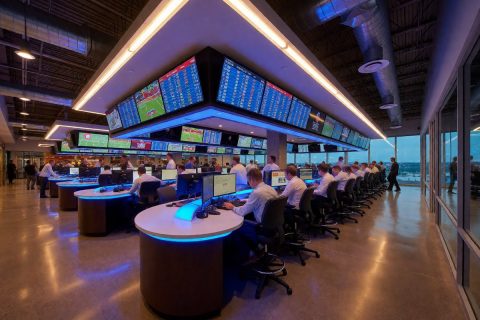
Founded in 2012, DraftKings evolved from a daily fantasy platform into a major sportsbook entity. By 2025, the company reported 6 billion dollars in revenue, driven largely by its successful transition into the legal sports betting market.
The industry is pleased to support the Safer Gambling Campaign #BetRegret as one of the many responsible gambling initiatives undertaken with operators support. Our commitment to reducing risks remains unabated and we will continue to work with charities and Government to improve Research, Education and Treatment in this area. Following on from our recently announced pre-watershed live sports advertising ban #IGRG, the industry looks forward to rolling out more initiatives that will protect consumers’.

13th December 2018: The Industry Group for Responsible Gambling (‘IGRG’) has today announced major changes to its Gambling Industry Code for Socially Responsible Advertising (‘the code’). These changes have been brought forward as part of the code’s annual review process.
London, 10 October: GambleAware has today published an independent evaluation of software packages designed to block access to gambling websites and apps. The review, by researchers from Winning Moves, considered both the technical and therapeutic benefits of such software. The evaluation compared three specialist gambling solutions and three more general products.
Today the Remote Gambling Association published good practice guidelines to assist in the overall improvement and consistency of complaints handling across the gambling sector.

The Remote Gambling Association has today published guidance to help licensed gambling operators to comply with their obligations under the General Data Protection Regulation (GDPR).
A Remote Gambling Association statement in response to the Gambling Commission Review of online gambling published on 26th March 2018
The IGRG today announced a further enhancement to the Industry Code (‘the Industry Code’) for Socially Responsible Advertising. It requires that throughout each television advert a responsible gambling message or a reference to www.begambleaware.org will appear. The provision will come into force at the end of June 2018.

We are pleased to announce that a dedicated GAMSTOP office has now been put in place. Therefore if you have any queries in relation to GAMSTOP the team can be reached on 01423 790354 or feel free to e-mail Fiona Palmer (fpalmer@gamstop.co.uk ) or Katie Reynolds-Jones ( KReynolds@gamstop.co.uk ) directly.

22nd February 2018 - The Remote Gambling Association (“the RGA”) has today published good practice guidelines to help operators when they are developing or purchasing systems to enable them to recognise problematic online gambling behaviour and interact with identified customers to address the behaviours that are of concern.

We at the Remote Gambling Association have produced a five minute video entitled ‘An Introduction to Online Gambling’ which explains in very simple terms how online gambling works, is regulated, taxed and kept crime free.

The Registration Form and the GAMSTOP Operator Side Implementation Guidance (GOSIG) are now available to enable the onboarding process for ALL (not just RGA members) British licensed online gambling operators to integrate with GAMSTOP in advance of the scheme going live in Spring 2018.

The Remote Gambling Association (RGA) today announced that it would urge the Government to introduce a statutory levy to replace the current system of voluntary funding for research, education, and treatment of problem gambling; and to ensure that the National Responsible Gambling Strategy is properly funded.
The European Commission today announced its decision to close all pending infringement cases and outstanding complaints against EU Member States whose regimes regarding online gambling are in breach of EU law. The Remote Gambling Association (RGA) views this decision as highly questionable, especially as it is based on and not on any legal assessment of the merits of the cases.

While the Portuguese online gambling regime is due to be reviewed two years after the first license was issued by the gambling regulator (SRIJ), a Eurogroup Consulting report commissioned by the Remote Gambling Association (RGA) estimates that 68% of the Portuguese gambling online gamble via operators that are not licensed in the country. The report demonstrates that the Portuguese legislation has not achieved one of its key objectives, namely reducing the unregulated offer, and the RGA believes that a more sensible licensing regime along with a workable taxation system based on Gross Gaming Revenue (GGR) for all online products would bring the best possible outcome for consumers, the industry and the Government.

At a time when the Brazilian Congress and Executive branch are working towards a competitive regulated online gaming market, a KPMG report commissioned by the Remote Gambling Association (RGA), estimates that the size of the market measured in terms of Gross Gaming Revenue (GGR) could be worth above R$6.7bn (US$2.1bn). The RGA believes that the industry, local consumers as well as the government would greatly benefit from a well-regulated sector that would attract reputable operators, protect consumers and generate much needed tax revenues.
1st June 2017 - The Remote Gambling Association (“the RGA”) announced today that GAMSTOP would be the name of the national online self-exclusion scheme which it agreed to design and implement to meet the aims of the Gambling Commission’s Licence Conditions and Codes of Practice.
