
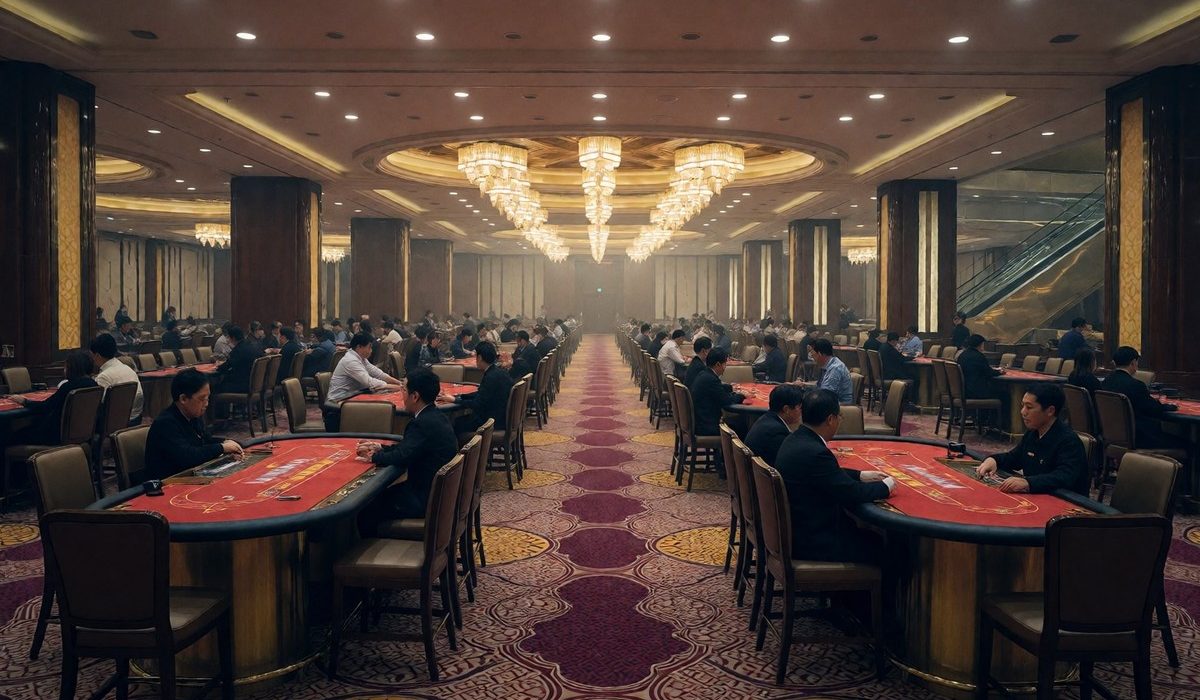
Galaxy Entertainment reported a 12 percent increase in mass-market sales despite a 13 percent drop in high-stakes revenue. Macau's September gross gaming revenue fell 1.2 percent year-on-year to 18.1 billion patacas amid regulatory shifts and changing VIP demand.
The VIP Divergence
Galaxy Entertainment Group reported Q3 revenue of HK$17.3 billion. Sales from its mass-market segment increased 12 percent year-on-year. High-stakes gambler sales fell 13 percent compared to the previous quarter. The company also saw a 5 percent climb in high-stakes revenue. At Galaxy Macau, gambling revenue for both market ends rose 12 percent year-on-year. This resilience contrasts with Sands China, which reported 1Q26 net revenues of US$2.11 billion. Sands China saw its adjusted property EBITDA margin decrease 140 basis points year-on-year to 29.9 percent, though this remained 40 basis points higher than in 4Q25. While Sands China targets the premium mass segment through its Londoner rebranding, Galaxy Entertainment Group reported a 12 percent year-on-year increase in mass-market sales even as high-roller sales fell 13 percent from the previous quarter. You know the mass market drives these margins, but the VIP decay tells a different story. The VIP sector now accounts for roughly half of total revenue, a sharp drop from over 70 percent in 2014. Galaxy’s 1Q25 total net revenue reached HK$11.2 billion, including gross gaming revenue of HK$10.9 billion (US$1.38 billion), a 13.6 percent year-on-year increase. Group-wide Adjusted EBITDA grew 16.3 percent year-on-year to HK$3.30 billion (US$412.5 million). Galaxy Macau reported a 33 percent margin, which exceeded the 31 percent margins seen in both 1Q24 and 4Q24. StarWorld saw its GGR fall by 5.2 percent year-on-year to HK$1.36 billion. StarWorld also saw both VIP and mass segments decline year-on-year, with adjusted EBITDA falling 19.5 percent to HK$350 million. Galaxy Chairman Francis Lui noted the company continues to drive the business through property enhancements and the implementation of smart tables. To counter the retreating VIP demand, operators like Sands increase the proportion of high rollers they lend to directly rather than through junket operators.
The September Slump
Macau recorded its lowest monthly gross gaming revenue for 2026 in September. The revenue reached 18.1 billion patacas, or US$2.24 billion, marking a 1.2 percent decrease year-on-year. This figure fell 17.5 percent below the August totals and missed the 2.2 percent growth consensus. The September performance remains 17 percent below the pre-pandemic levels of 2019. This slowdown followed a period of demand after the World Cup ended. Bad weather, specifically Super Typhoon Ragasa, also forced casinos to shut for more than a day. The Bloomberg Intelligence index of Macau casino operators rose 3.75 percent in September, even as GGR struggled. For the first eight months of 2026, Macau GGR rose 3.2 percent year-over-year to 187.1 billion patacas ($23.1 billion). August saw a tourism boom with 4.2 million visitor arrivals, which reached 116 percent of 2019 levels. Upcoming events like the NBA China Games, featuring the Brooklyn Nets and the Phoenix Suns, aim to capture more market share.
| Metric | Value |
|---|---|
| Sept 2026 GGR | 18.1 billion patacas |
| Sept 2026 YoY Change | 1.2% decrease |
| 2026 8-Month GGR | 187.1 billion patacas |
| 2026 8-Month YoY Change | 3.2% increase |
| August Visitor Arrivals | 4.2 million |
| August Tourism vs 2019 | 116% |
Regulatory Crackdowns
The Macau government reduced the permitted stay for Chinese passport holders transiting through the enclave from seven days to five days effective July 1 to deter mainlanders from breaching entry requirements to gamble. Secretary for Security Cheong Kuoc Va stated the government talks with authorities across the border about this issue. Legislator Jose Pereira Coutinho argued the move will not resolve the problem of mainland visitors traveling to Macau without visiting another destination. Regulatory pressure also hits the junket industry. Dore Entertainment Co Ltd will shut down a VIP room at Wynn Macau on October 31. This follows an internal fraud incident where an employee allegedly stole over HKD 100 million. This fraud undermined investor confidence and forced the operator to scale down. New accounting guidelines require junket operators to compile monthly reports starting next year. The government also plans to establish a central credit database to minimize credit risk. Regulatory supervisor Paulo Martins Chan stated the city needs to improve the quality rather than the quantity of the gaming industry. Daiwa Capital Markets estimates the junket industry total debt at between HK$30 billion and HK$60 billion. Additionally, 23 of 38 Macau organizations froze salaries between July 2025 and June 2026, with the average pay rise falling to 1.1 percent. Will the increasing credit risk for junket operators lead to further VIP room closures?
Long-Term Prospects
J.P. Morgan projects gross gaming revenue will rise 13 percent year-on-year in the second half of 2025. The bank expects EBITDA for gaming concessionaires to rise 12 percent in the third quarter and 16 percent in the fourth quarter. Mass and slot play accounted for over 80 percent of sequential GGR gains in the second quarter, compared to just 14 percent from VIP play. J.P. Morgan expects the mass segment to reach 127 percent of 2019 levels by 2026. The October Golden Week saw a surge in tourism with 1.14 million visitors. Mainland Chinese tourists traveling under the Individual Visit Scheme grew 23 percent since the beginning of the year. Infrastructure improvements, including the expansion of the Barrier Gate and the Guangzhou-Zhuhai Intercity Railway, support visitor numbers. The renminbi’s 4 percent appreciation since April helps luxury spending. Hong Kong’s liquidity boom, marked by falling interbank rates, also eases access for premium gamblers. Casino revenue in Macau fell 23 percent to 28 billion patacas in October, according to the Gaming Inspection and Coordination Bureau. Analysts DS Kim and Selina Li forecast momentum to last through 1Q26E at least, citing a 60 percent sector stock rally since April.