
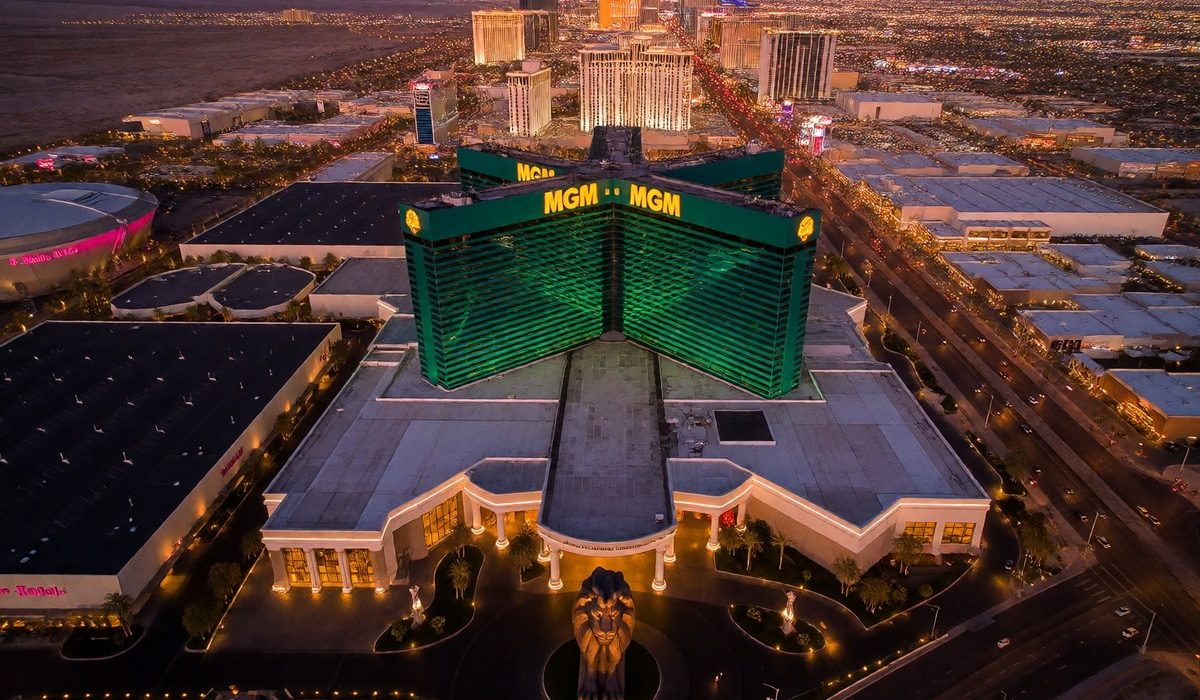
MGM Resorts transitioned from its 1969 film studio origins to digital gaming through the BetMGM joint venture. The operator reported $710 million in net revenue for the third quarter of 2026, leveraging a massive M life Rewards database to drive profitability.
The MGM foundation and the digital transition
MGM Resorts International traces its origins to 1969 when Kirk Kerkorian bought a controlling stake in the Metro-Goldwyn-Mayer film studio. Debt from his acquisitions of MGM and Western Airlines in 1970 and 1971 forced him to sell a majority of International Leisure to Hilton Hotels. He later opened the MGM Grand Hotel and Casino in 1973. The company renamed itself MGM Grand, Inc. in 1987 after the 1979 split between the film studio and the hotel business. In 1988, the company acquired the Desert Inn and Sands casinos for $167 million. Construction on the MGM Grand Las Vegas began in 1991 and the property opened in 1993 at a cost of $1 billion. In 1995, a joint venture began construction on the New York-New York Hotel and Casino, which opened in 1997 for $460 million. The company later merged with Mirage Resorts in 2000, acquiring the Bellagio, Treasure Island, and Boardwalk casinos.
This historical foundation led to the creation of the BetMGM joint venture with Entain. In Q3 2021, BetMGM became the largest sports betting and iGaming operator in the US. At that time, BetMGM held a 23% market share across all US jurisdictions and a 26% market share in active jurisdictions. In August 2021, the venture held 32% of the iGaming market. The company leveraged the M life Rewards database, which contains more than 37 million customers. About 16% of new players came from MGM customers. These players provided five times the marketing ROI compared to non-MGM-sourced players. Net revenues for BetMGM in Q3 2021 totaled $227 million, which was a 17% increase from the $194 million in the previous quarter.
The Entain partnership and global expansion
The relationship between MGM and Entain involves significant financial maneuvering. MGM attempted to buy Entain through an $8 billion bid and a later $11 billion proposal. Entain rejected these offers because they significantly undervalued the company. Entain also owns brands like Ladbrokes, Coral, Bwin, and Partypoker. BetMGM operates in 30 markets and provides mobile and retail betting services. In 2022, the company entered the Ontario market. In July 2026, BetMGM opened pre-registration for its online platform and casino in Alberta, Canada. This expansion includes over 4,000 games and plans for live dealer games from Playtech Studio at MGM Grand Las Vegas.
Deutsche Bank estimates the US domestic betting handle for the 2026 FIFA World Cup will reach $3.3 billion, with BetMGM accounting for $250 million. The company also expanded into Ohio, Massachusetts, Puerto Rico, and Kentucky. In 2023, the company held a 14% market share in Sports Betting and iGaming in the US and a 22% share in Ontario.
Financial performance and the pivot to value
The operator is changing its strategy to prioritize profitability over volume. I see the decision to pull back marketing in sportsbook-only states to focus on higher-value players as a necessary move. BetMGM reported net revenue of $710 million for the third quarter of 2026, which is a 7% increase from the $667 million in the same period in 2025. iGaming revenue reached $483 million, while online sports revenue reached $216 million. While the company focuses on higher-value customers to boost profitability, the total number of monthly active players fell to 878,000 during the third quarter of 2026, which is a 3% decline from the previous year. I find the decline in active players to 878,000 a clear failure of the previous volume-based growth model.
| BetMGM Q3 2026 Performance | Value |
|---|---|
| Net Revenue | $710 million |
| iGaming Revenue | $483 million |
| Online Sports Revenue | $216 million |
| Adjusted EBITDA | $86 million |
| Monthly Active Players | 878,000 |
Adjusted EBITDA grew 112% from $41 million to $86 million. The total online sports handle reached $3.24 billion, a 3% increase. The gross gaming revenue hold rose from 10.1% to 10.7%. Net gaming revenue hold grew to 6.7%. In 2023, BetMGM net revenue from operations reached $1.96 billion. For 2026, the company expects net revenue between $2.9 billion and $3.1 billion, with adjusted EBITDA between $300 million and $350 million.
Market pressures and strategic targets
Competition from prediction markets like Kalshi and Polymarket creates pressure. CEO Adam Greenblatt expects this environment to persist until at least mid-2027. The company is also focusing on multi-product states and premium mass sports players. Net gaming revenue per active player rose 18% in sports and 4% in the casino segment. The company also released new Game of Thrones-themed titles and a refreshed Borgata brand. It launched the "Goal Rush Jackpot" and a new game featuring soccer player Tim Howard. You already know the basics of the MGM history, so focus on the digital numbers.
The company maintains a partnership with Major League Baseball that began in 2018. It also offers an NHL ticket giveaway to Alberta residents aged 18 or older. The company targets $500 million in adjusted EBITDA for 2027. Can BetMGM maintain this profitability while its player base continues to shrink?